
The Witness From Tomorrow
A police inspector learns that the key witness in his case is himself, from a different timeline
Created: 4/30/2026 · 9 min read
Scene 1 — Setup
The call came in at half past eleven, and Detective Inspector Cass Maren was still at her desk when it did.
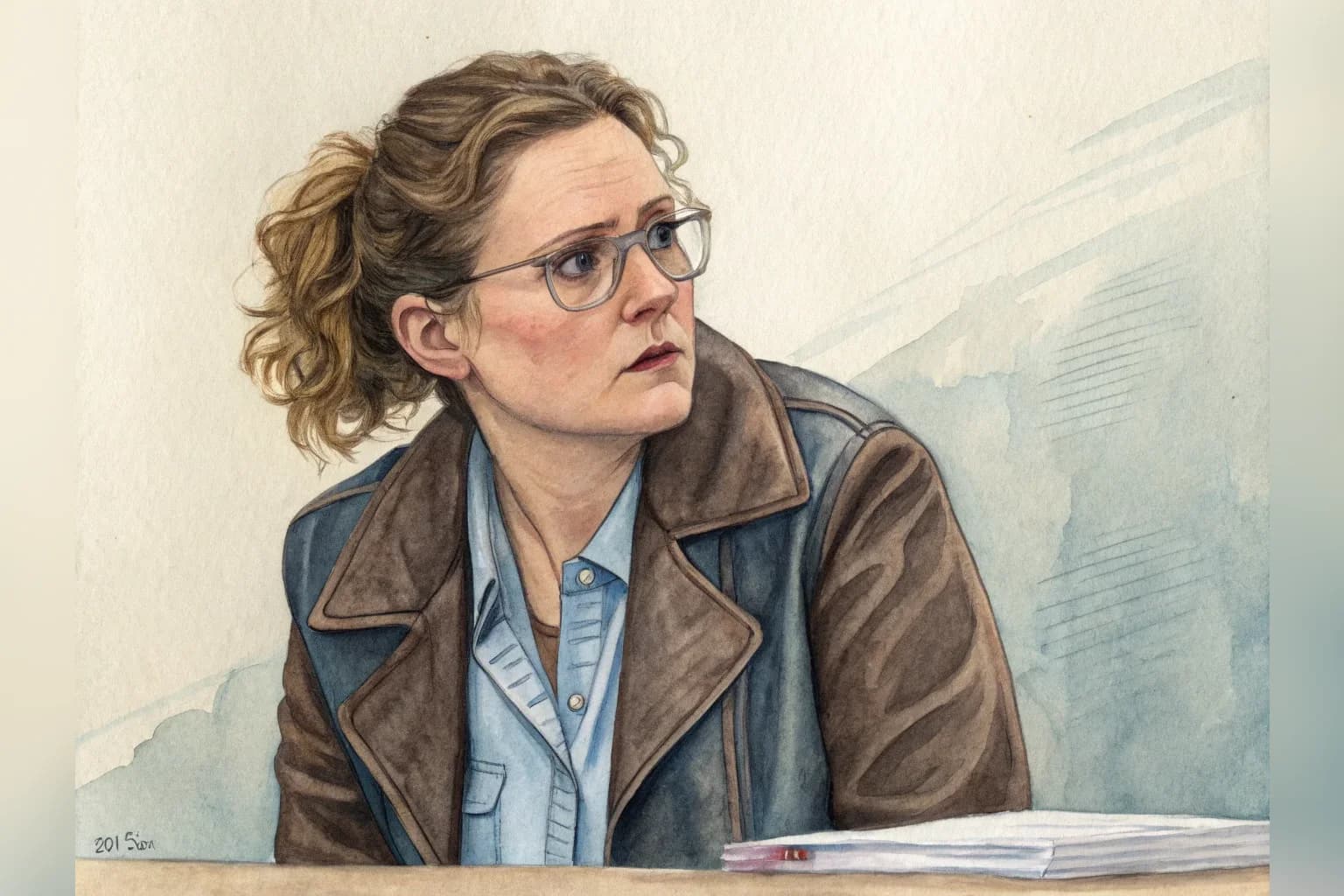
She'd been staring at the Alderman file for two hours, her wavy hair escaping its ponytail in loose curls that kept falling across her cheek. She tucked a strand back with one ink-stained finger and read the same paragraph for the fourth time. The witness descriptions were useless — vague, contradictory, the kind of testimony that collapsed under mild cross-examination. The Alderman case was dying, and she could feel it.
The phone buzzed. Dispatch.
"Maren." She pressed it to her ear, already reaching for her jacket.
"Inspector. We have a walk-in at Central. Civilian claims to have information on the Alderman shooting." A pause. "He's asking for you specifically."
She was already standing, her wiry frame cutting between the cluttered desks of the empty bullpen. "Name?"
Another pause, longer this time. "That's the thing, Inspector. He gave your name. Says his name is *also* Cass Maren."
She stopped.
"Run it again."
"We did. Three times. Fingerprints are in the system now." The dispatcher's voice had gone careful, the way voices went when facts stopped making sense. "They match yours."
The fluorescent lights hummed overhead. Cass stood very still, one brown eye and one blue eye fixed on nothing in particular — a crack in the linoleum, a coffee ring on someone's abandoned notepad. The constellation of freckles across her nose creased as she frowned.
"He's cooperating?"
"Completely. Says he's been waiting three days to find the right moment to come in. Says you'd understand why." Another beat. "He also says — and I'm reading this verbatim — *don't let them put him in a cell, or the window closes.*"
Cass's hand tightened around the phone.
She could go in through the front, officially, with a sergeant beside her. Or she could go alone, quietly, and hear whatever impossible thing this man had to say before anyone else did.
Your choice
access the fingerprint database herself to verify the match before approaching him
Scene 2 — Development
She went to Records first.
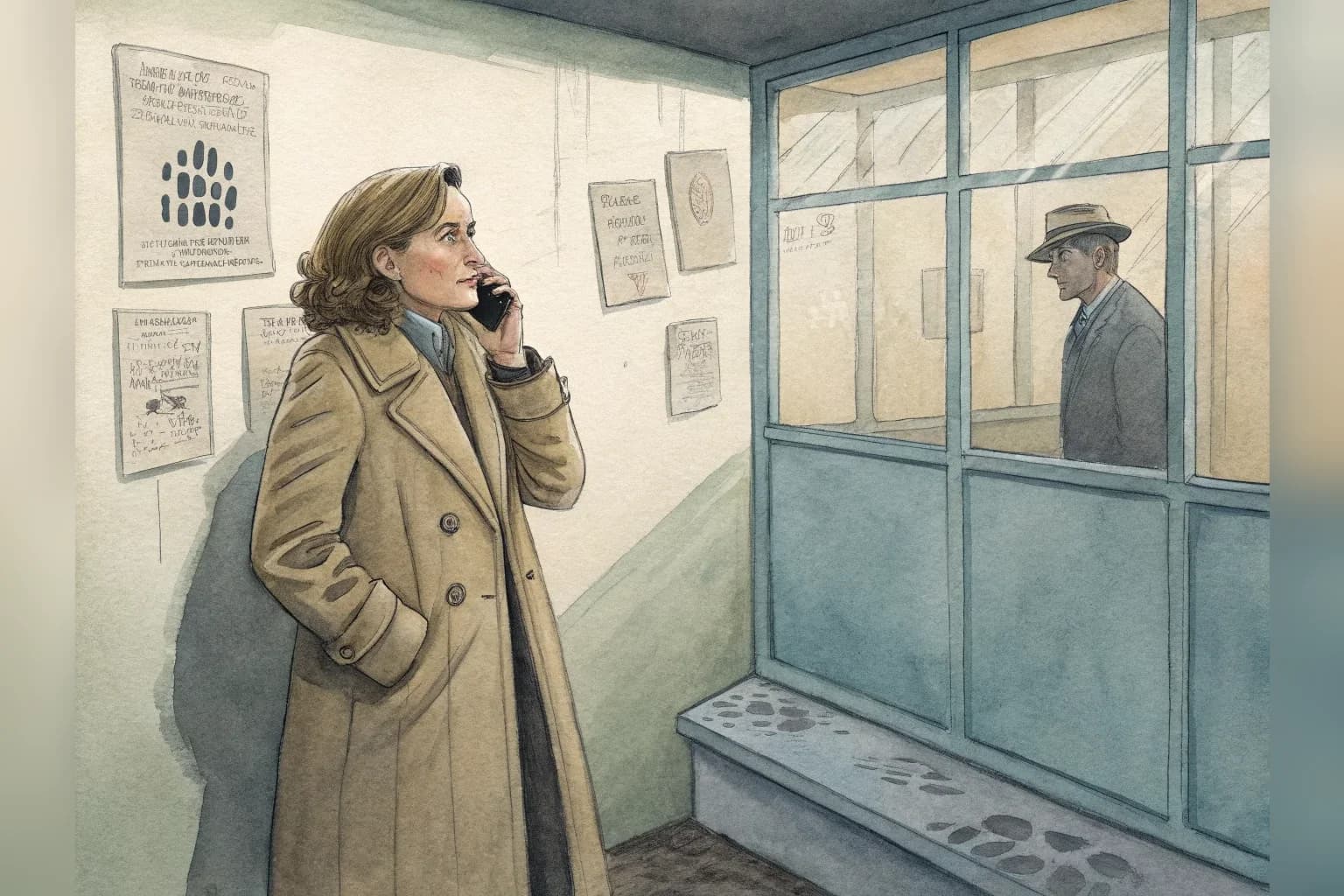
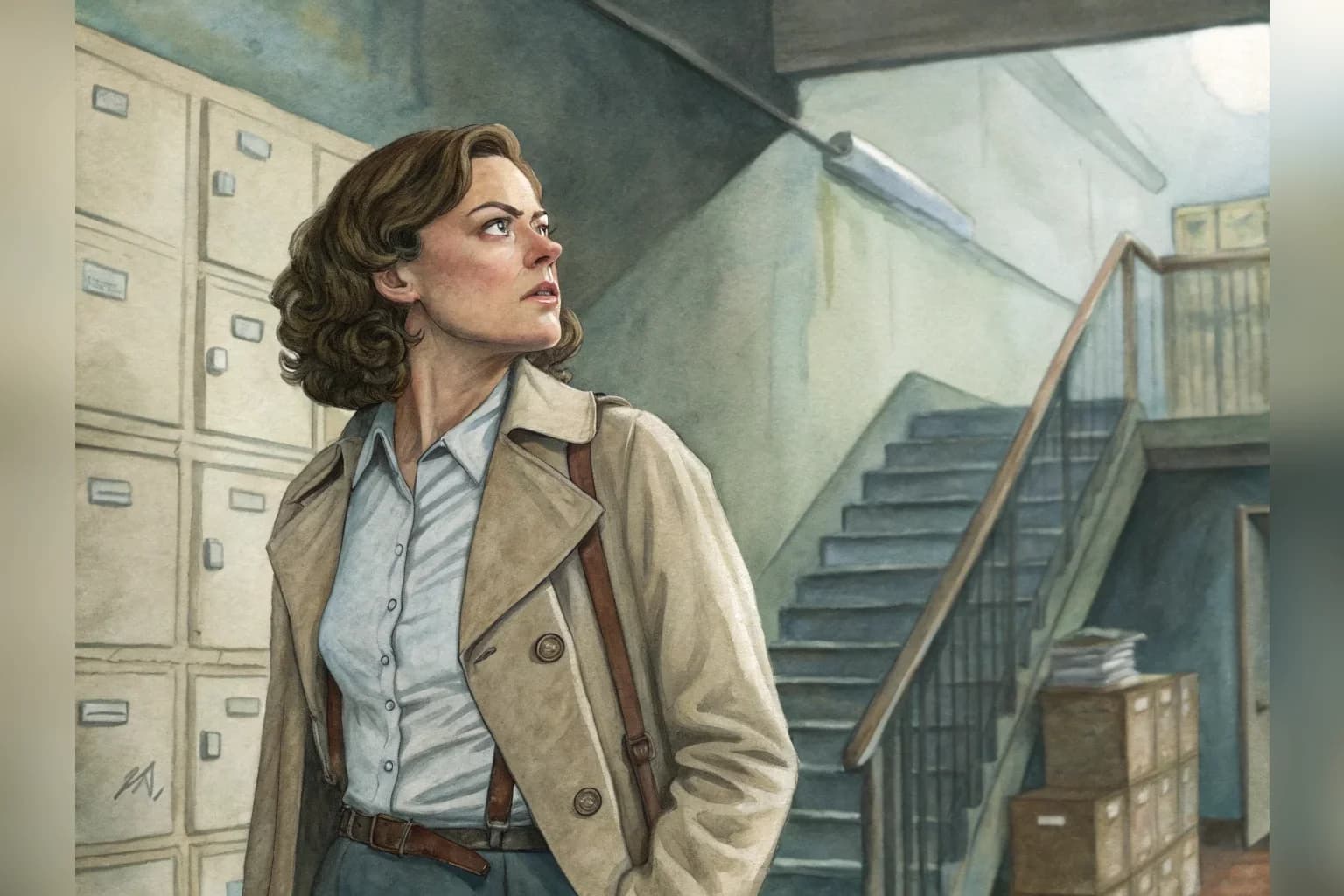
The basement corridor smelled of old paper and recycled air, the fluorescents here a warmer yellow than upstairs, several bulbs half-dead and flickering at irregular intervals. The archive terminals lined the far wall like a row of confessionals. This late, the room held only one other person — a civilian data clerk who looked up, clocked Cass's expression, and found somewhere else to be.
She sat down, badged in, and pulled up the biometric log.
The system had timestamped the intake at 23:14. She opened the file.
The print comparison rendered in split-screen: left hand, right hand, all ten points of comparison. The algorithm's confidence score sat at 99.7%. She stared at that decimal as though the missing 0.3% might be load-bearing.
She pulled her own file. Twelve years in the system, original intake from her first posting. The whorls and ridges mapped against each other on screen, and the match held. Not similar. Identical.
Her jaw tightened. She photographed both screens with her phone, then cross-referenced against the DNA flag — no sample taken yet from the walk-in. She typed the request herself and marked it urgent.
Then she sat back and thought about what fingerprints could and couldn't tell you.
They told you *who*. They didn't tell you *how*.
She closed the terminal, stood, and straightened her jacket. The man — whoever, whatever he was — had come in voluntarily, asked for her by name, warned about a closing window. He hadn't run. He was still up there, waiting.
She could go to Interrogation Room Two, where the sergeant would have placed him. Standard procedure, recorded, witnessed.
Or she could check the custody log first and find out exactly who'd been in that room with him for the past forty minutes.
Your choice
go directly to interrogation room two and confront the man about the fingerprint match
Scene 3 — Climax
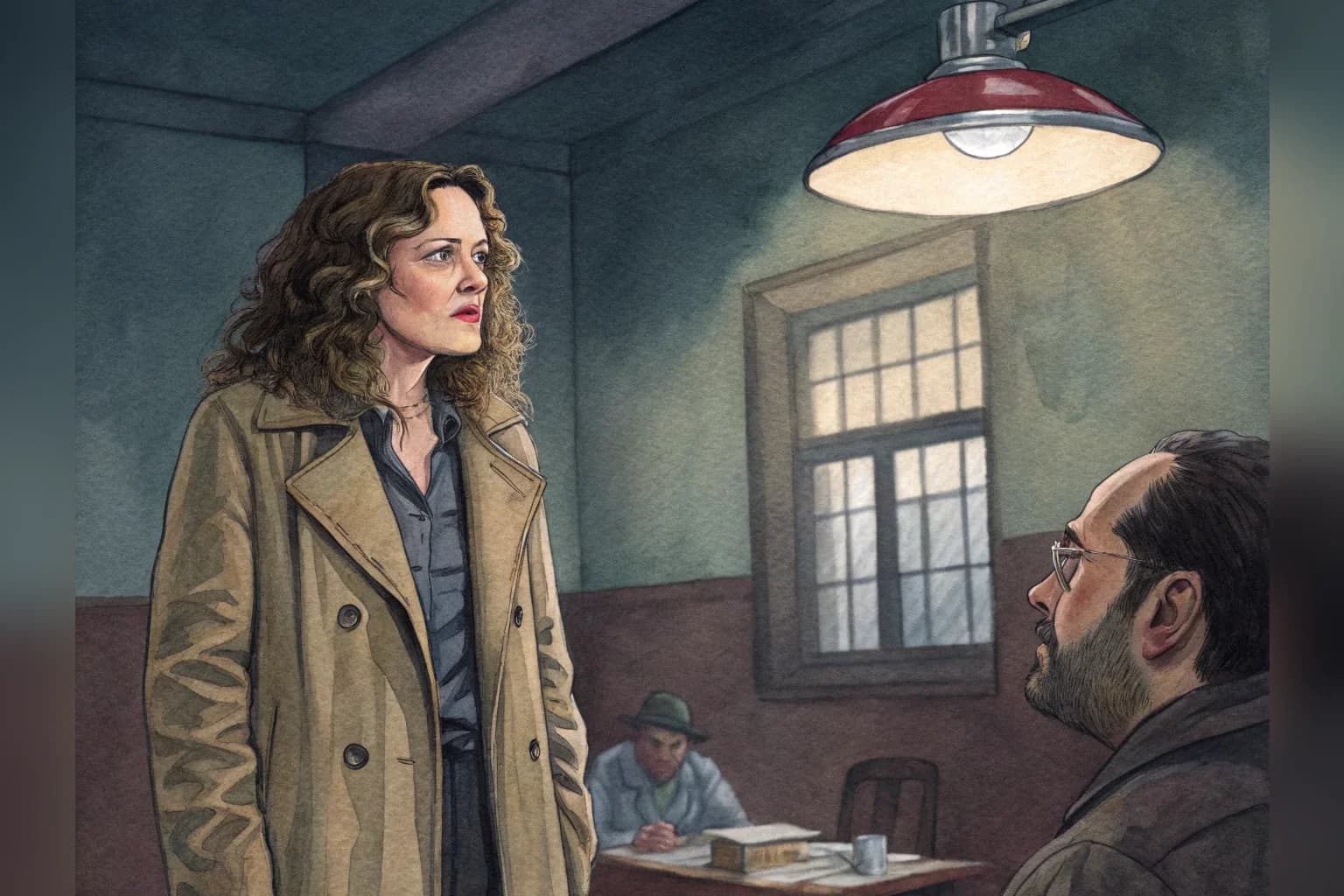
Interrogation Room Two was at the end of a corridor that smelled of industrial cleaner and stale coffee. The door had a small wire-mesh window set into it at eye level. Cass paused there, one hand flat against the frame, and looked through before entering.
The man inside was sitting with his hands folded on the table. He was her height. Her build — that same wiry economy of frame. His hair was darker than hers, shorter, but it had the same tendency to wave. He was looking at the two-way mirror as though he knew exactly what it was for and had already made peace with it.
She pushed through the door.
He turned, and she saw his eyes. One blue, one brown. The freckles across his nose arranged in the same scatter as hers, as if someone had used the same template twice.
Neither of them spoke for a moment.
She set her phone on the table, screen up, both biometric screens visible. "Explain this."
He looked at the image, then back at her. "I was hoping you'd have some theories by now."
"I have questions."
"That's a start." He didn't seem nervous. That bothered her more than anything else so far — the absence of performance. He wasn't trying to unsettle her. "The Alderman shooting wasn't a shooting," he said. "The wound pattern's wrong. You already know that. You've been staring at it for weeks."
Her jaw tightened. "How do you know what I've been staring at?"
He looked at her steadily. "Because three months ago, I was staring at exactly the same file." He pressed his thumb to the table between them. "And I made a choice that closed a door I didn't know was a door until it was too late."
The recording light blinked red above them. Whatever came next would be on tape.
Your choice
turn off the recording and ask him directly if they're related by blood
Scene 4 — Development
Cass reached up and twisted the red indicator light's cable from its socket. The blink died. The room went quieter in the way rooms do when surveillance leaves them.
She sat down across from him for the first time.
Up close, the resemblance was worse. The freckles weren't just similar — they mapped. Cheekbone to cheekbone, nose to nose. She'd grown up an only child, raised by a single mother who'd deflected questions about her father with the practiced ease of someone who'd rehearsed the deflections. She'd stopped asking by the time she was twelve.
"Are we related?" she said. No preamble.
He didn't flinch. "I don't know."
"That's not an answer."
"It's the only honest one I have." He leaned forward slightly, elbows on the table. "I woke up in a hospital in Lyon fourteen weeks ago with your name in my head and no memory of how I got there. The fingerprints were already mine. Whatever happened to me — whoever did this — they used you as the template."
She studied his face for the tell. The micro-expression, the hesitation, the thing that would give him away. She found nothing she could use.
"Lyon," she said.
"Alderman was there two weeks before the shooting." He said it quietly, like he'd been saving it. "There's a clinic. Private, no public registry. I have an address."
Her hands were flat on the table. Still. She kept them that way deliberately.
The address would either break the case open or walk her straight into whatever had made this man — made *her* — appear in a custody suite with identical prints and no explanation. She could take the address and move on it tonight, alone. Or she could bring it upstairs, officially, and watch it disappear into bureaucratic review before morning.
Your choice
Chose to end the story
Scene 5 — Finale
She took the address.
She wrote it on the inside of her wrist in ballpoint — the old habit, the one that drove her sergeant mad — and she walked out of the building without signing anything.
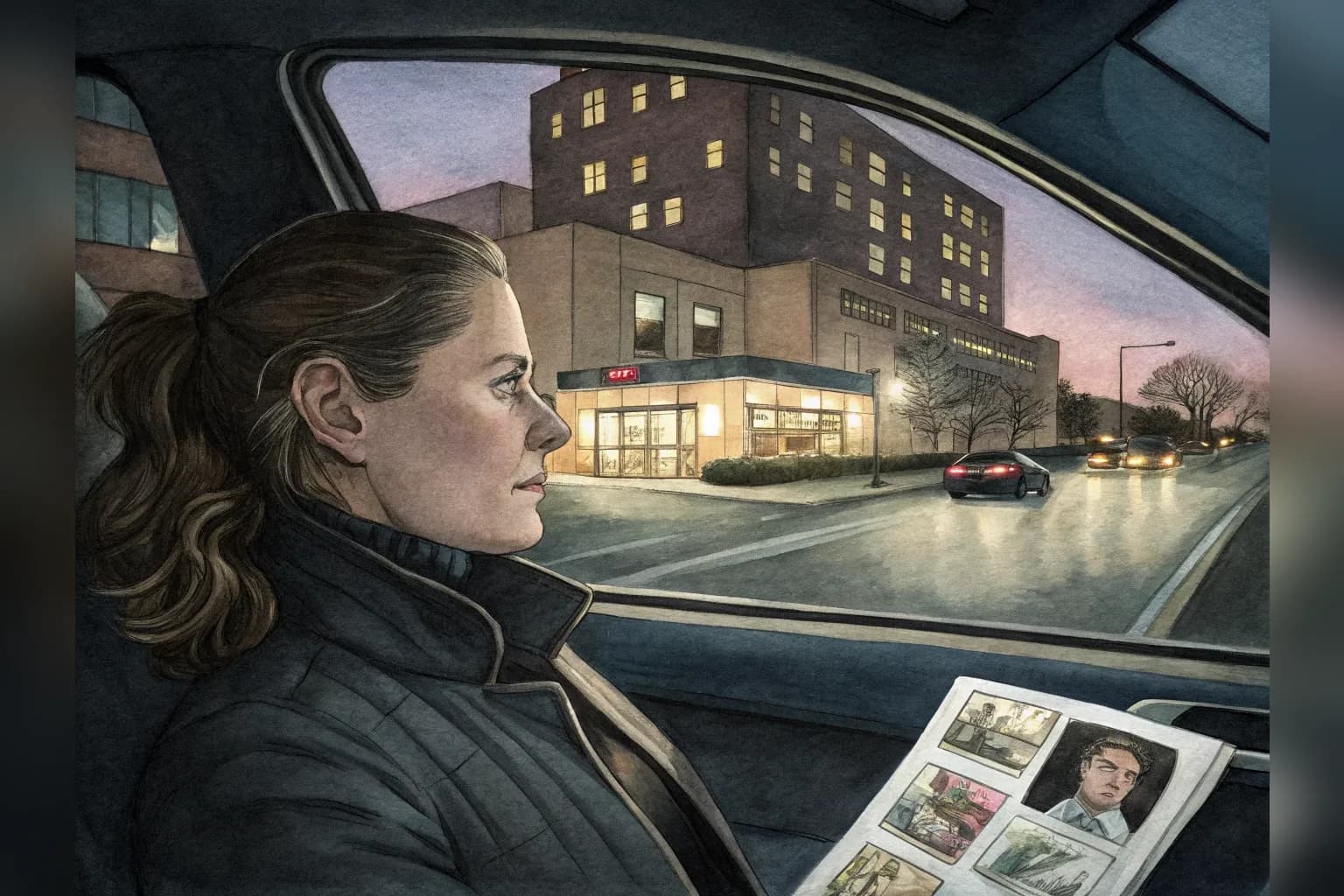
The clinic was forty minutes east, past the ring road, in an industrial quarter that had been quietly converting itself into something respectable for the last decade. The building was glass and pale concrete, the kind of architecture that wanted to look like a hospital without committing to it. At half past one in the morning, two windows on the third floor were lit.
Cass sat in her car across the street and looked at those windows for a long time.
She'd left him in the interrogation room. Not locked in — she'd made that clear to the desk sergeant, some procedural fiction about voluntary assistance. Whether he'd still be there when she returned was a question she'd decided not to answer in advance.
She got out of the car.
The clinic's front entrance was locked, but the side door, the one used for deliveries, wasn't alarmed. She'd noticed that because she always noticed that. She moved through a corridor of stacked supply boxes, up a staircase that smelled of antiseptic, and found the lit room on the third floor without needing to search.
The Alderman file was on the desk inside. A physical copy, thick with photographs she hadn't seen. Beside it, a contact sheet with her name printed at the top — not hers to send, hers to receive. She'd been chosen as the template before she'd ever heard of this place.
She photographed everything. Methodically, without hurry, the way you worked when the case had finally opened and you didn't want to break anything.
On the drive back, the city moved past her windows in streaks of amber and white. She thought about the man in the interrogation room, his hands folded, his mismatched eyes patient in a way hers had never quite managed to be. Whatever they were to each other, they were both the result of something that had needed to be found.
She'd found it. That would have to be enough to begin with.