
The Village That Knows Your Name
A solo backpacker hiking the Caucasus mountains stumbles into a small village at dusk — but it's not on any map, no GPS signal works, and the locals greet him by name.
Created: 4/30/2026 · 9 min read
Scene 1 — Setup
The last light bled out of the sky somewhere above the treeline, and Mara had maybe twenty minutes before the path became a liability.
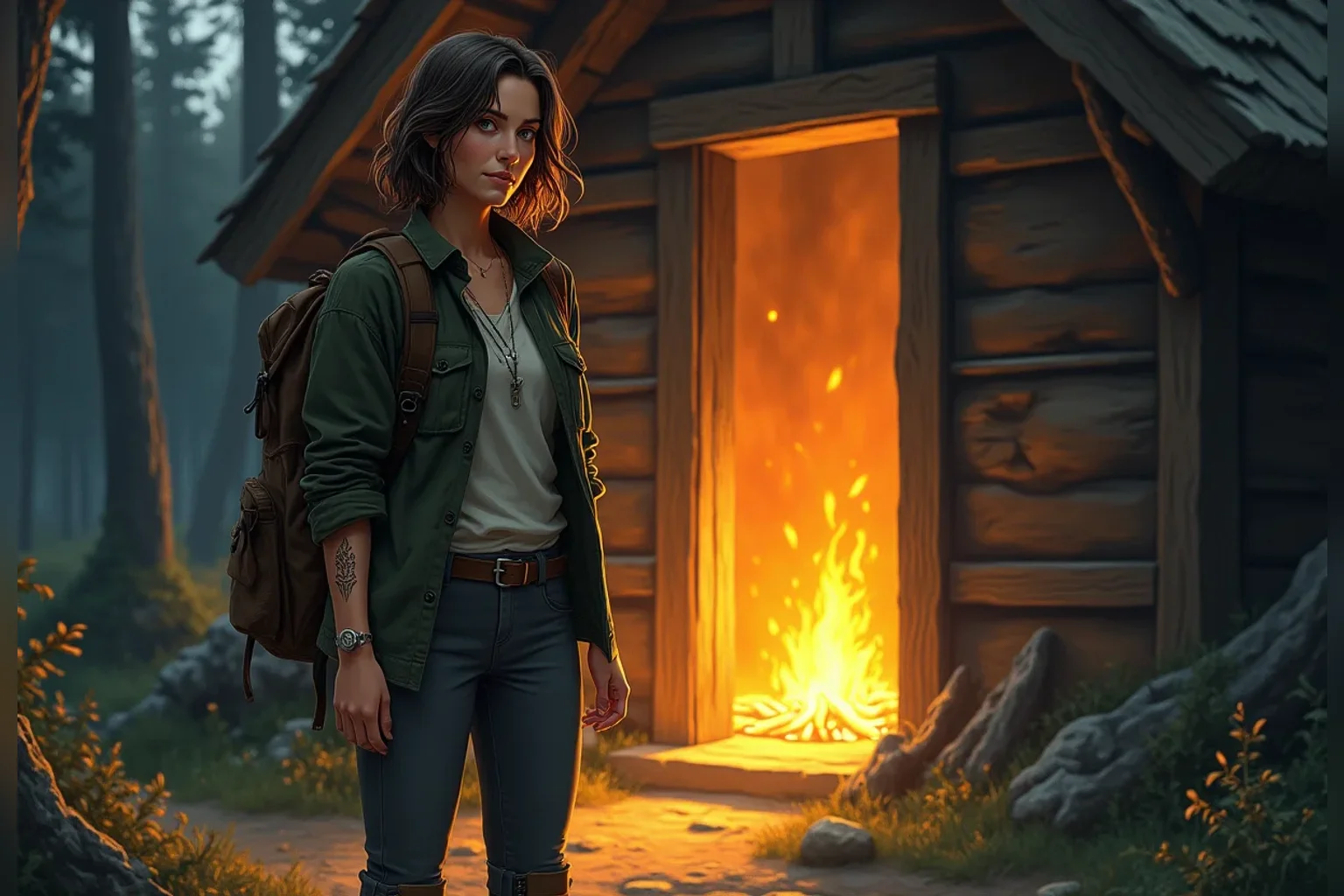
She pushed through a stand of silver birch, her shoulder-length hair catching on low branches, and stopped. Below her, cradled in a fold of the mountain she was certain hadn't appeared on any contour line, sat a village. Stone houses. Smoke rising from chimneys. A dog barking once, then going quiet, as if it had been told to.
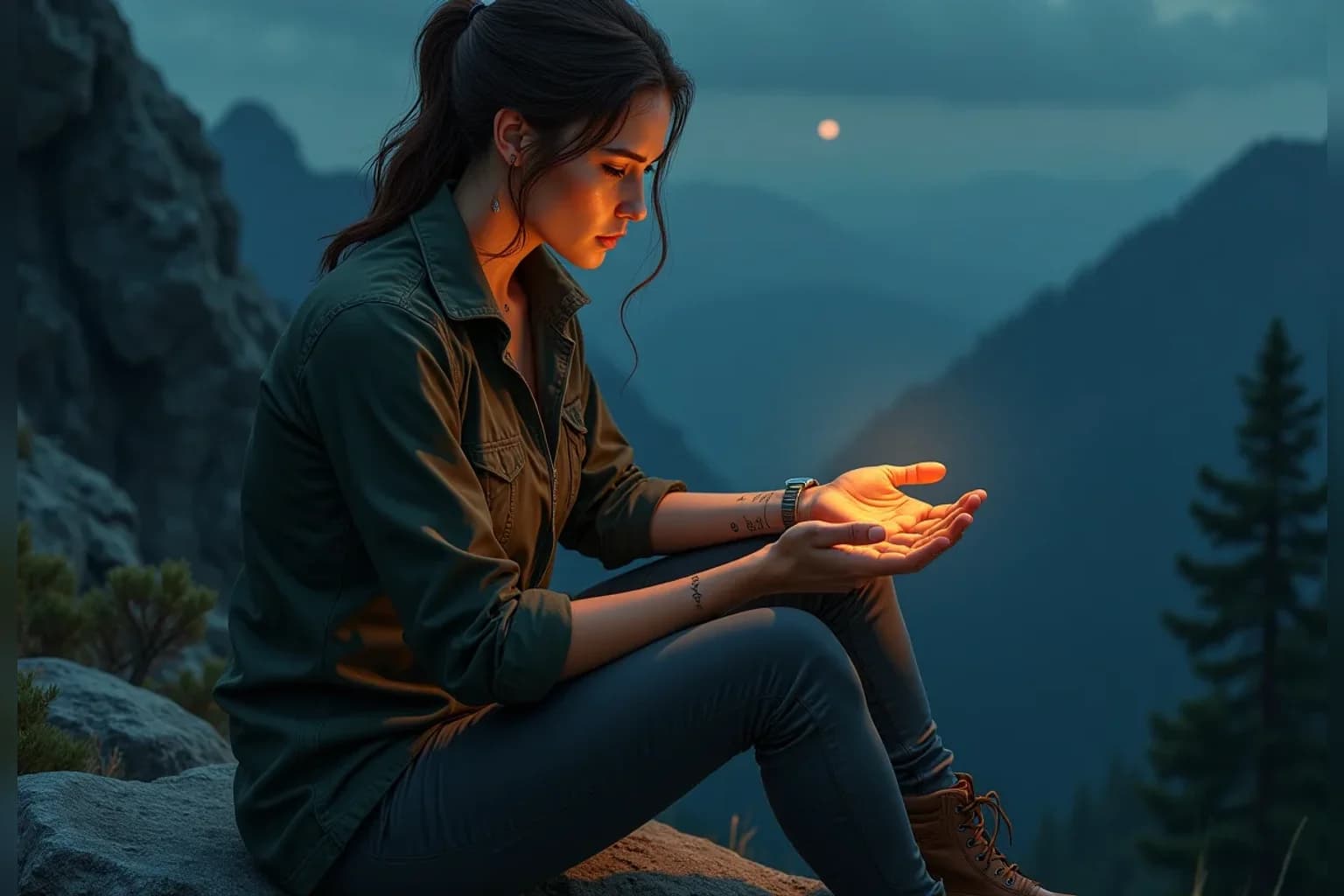
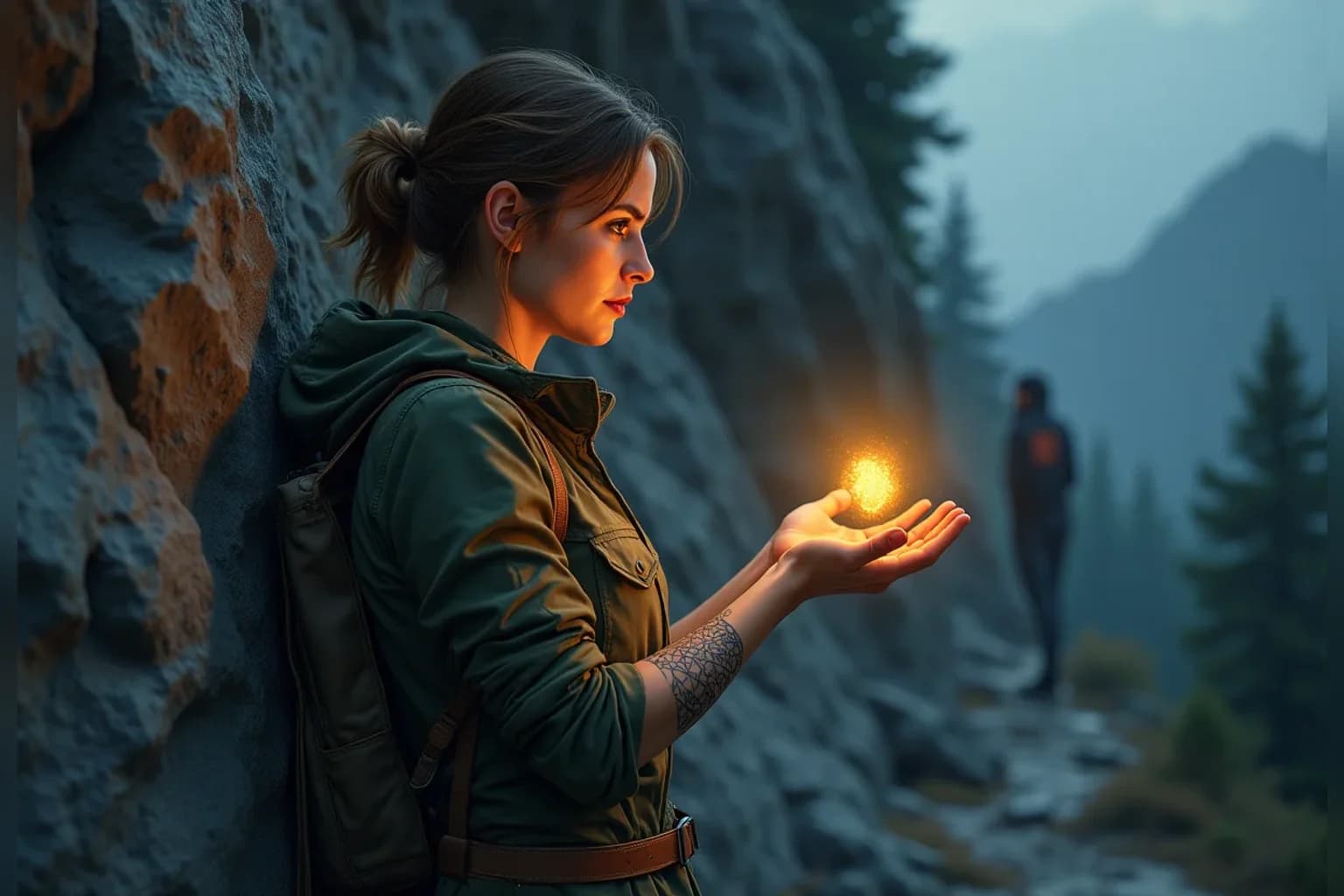
She checked her phone. No signal — expected. But the GPS app showed only a grey void where she stood, as though the cartographers had simply looked away. She tilted her wrist; the geometric tattoo running from her inner elbow toward her palm caught the last amber light. Her hands were steady. She noted that deliberately.
The path down was worn smooth, not by animals. She descended.
An old woman stood at the village's edge, arms folded into a dark shawl, watching Mara approach with the patient certainty of someone who has already decided how the evening will go. Beside her, a younger man leaned against the gatepost, arms crossed.
The woman spoke first — Georgian syllables Mara half-recognised from three weeks of studying the language on the train from Tbilisi. But one word was unmistakable.
Her name. Her full name. The one printed in no document she carried.
Mara's hazel eyes held the woman's face. "How do you know that?" she asked, in English, then tried the Georgian.
The woman smiled — not warmly, exactly, but with recognition. She stepped aside and gestured toward an open doorway spilling firelight.
The younger man said something low to the woman, who nodded once.
Stay and learn what they know. Or turn back up the mountain into the dark.
Your choice
enter the doorway calmly, accept their hospitality, and listen to what they have to say
Scene 2 — Development
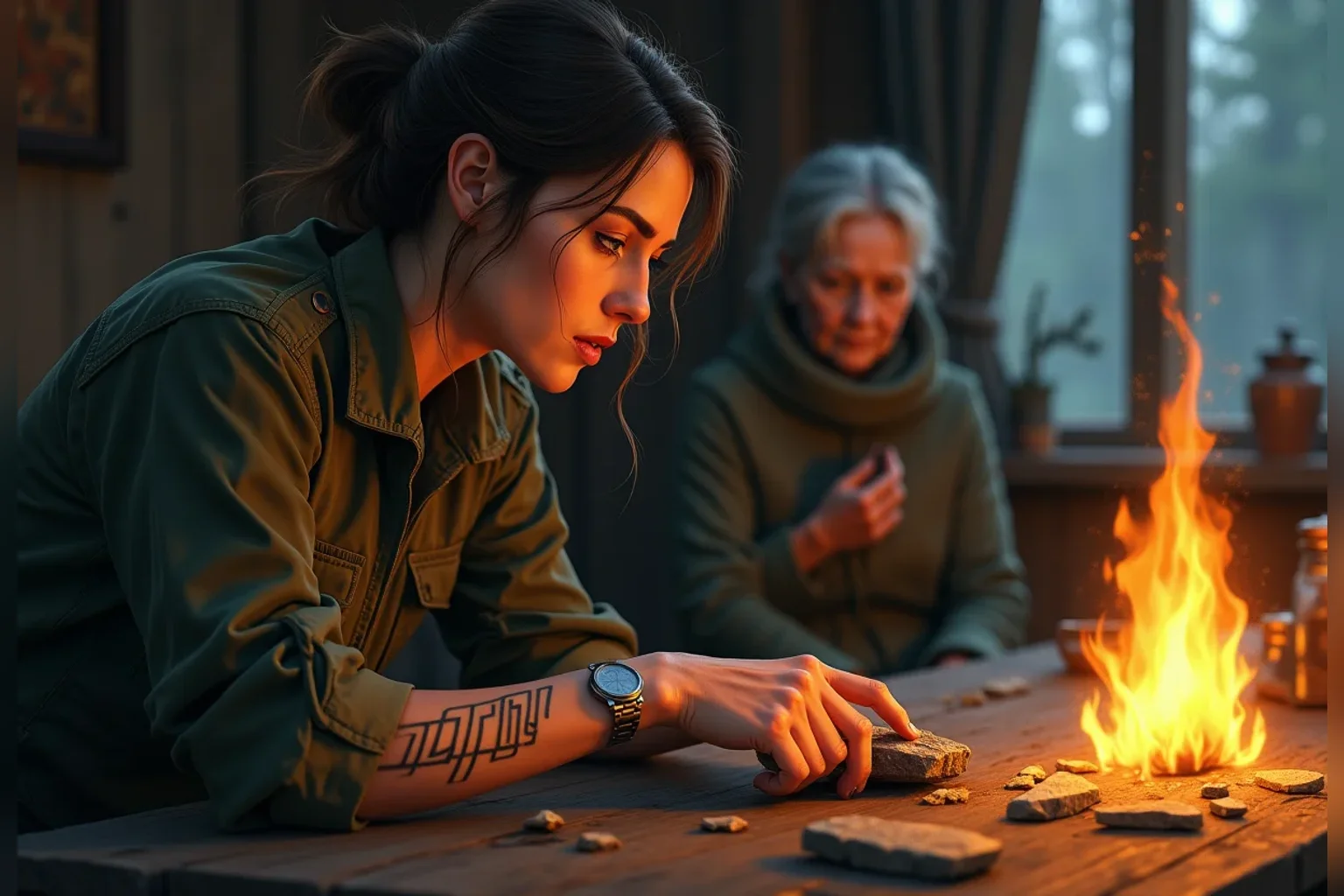
The room was small and dense with warmth — a fire burning low in a stone hearth, three oil lamps on the table, their light the colour of old honey. Dried herbs hung from the ceiling beams in tight bundles, and the smell of them, something between sage and resin, settled into Mara's lungs the moment she crossed the threshold. A wooden bench ran along one wall. A second woman, perhaps forty, sat there already, watching without pretending not to.
The old woman — the one from the gate — pointed to a chair at the table. An instruction, not an invitation. Mara sat.
Bread appeared. Then a small clay bowl of something dark and sharp-smelling. The younger man from the gatepost entered last, closing the door behind him with deliberate care. He remained standing.
The old woman lowered herself across the table from Mara and folded her hands. She spoke slowly, as though she'd decided Mara's Georgian was worth the patience. Mara caught fragments: *the map*, *the name carried in blood*, *what was left behind*.
"Whose blood?" Mara asked. Georgian first this time.
The old woman touched the back of her own wrist — the same anatomical position as Mara's tattoo, beneath the fabric of her sleeve.
Mara's jaw tightened. "I designed that myself. Three years ago. In Berlin."
The woman on the bench said something quiet to the man. He unfolded his arms and set a small object on the table between them: a fragment of carved stone, no larger than a matchbox. The lines etched into it were unmistakable. Geometric. Exact.
Older than three years. Older than Berlin. Older, perhaps, than anything Mara was prepared to accommodate.
She looked at the fragment, then at the old woman's waiting face. She could ask what it meant. Or she could ask where they found it.
Your choice
grab the fragment and run for the door, trusting instinct over conversation
Scene 3 — Climax
Her fingers closed around the fragment before the thought fully formed.
Cold. It was impossibly cold for something sitting in a warm room — a cold that climbed her palm and found the lines of her tattoo like a key finding a lock. She was on her feet, chair scraping back, before anyone moved.
The young man moved fast. She moved faster.
The door wasn't latched. She hit it with her shoulder and the night took her — cold air, woodsmoke, the dog starting up again somewhere to her left. Behind her she heard the old woman's voice, not raised, not frightened. Instructing.
Mara ran.
The worn path back up the mountain was invisible now, the birches reduced to pale columns in the dark, but her feet found the slope by memory and stubbornness. She ran until the lights of the village were gone and the only sound was her own breathing and the fragment biting cold into her closed fist.
She stopped behind a boulder, pressed her back against granite, and opened her hand.
The carved lines caught no light — there was no light — but she could see them. That fact arrived in her mind and she set it aside for later, when she could afford the vertigo of it. The geometry matched hers. Not resembled. Matched. Every angle, every interval.
A branch snapped below her. Then another — methodical, unhurried. Not the young man's pace. Someone who knew she would stop here, at this boulder, on this particular fold of the mountain.
A figure emerged from the tree line. Not from the village direction. From above.
A woman, roughly her own age, breathing easy. She held up both empty hands.
"I'm not with them," she said, in English that carried no Georgian accent at all. "But you need to decide whether to believe that before they reach us."
Your choice
throw the fragment at the stranger and bolt deeper into the dark forest
Scene 4 — Development
The fragment left her hand before she'd decided to throw it.
She heard it strike — the stranger's sharp intake of breath, a sound between surprise and pain — and then Mara was already moving, away from the path, away from the village below and the stranger above, sideways into the dark mass of the forest where the birches gave way to something older and denser. Pine, she thought. The ground changed underfoot: no more worn soil but a deep mat of needles that swallowed sound and gave nothing back.
She ran until her lungs burned, then walked until she couldn't hear pursuit, then stopped.
The forest here was absolute. No village light reached it. The canopy was a solid mass overhead, and the cold had a different quality — still, considered, as though the trees were holding their breath. She pressed her tattooed forearm against her chest without meaning to, a reflex she didn't examine.
Her hand felt wrong. She raised it in the dark.
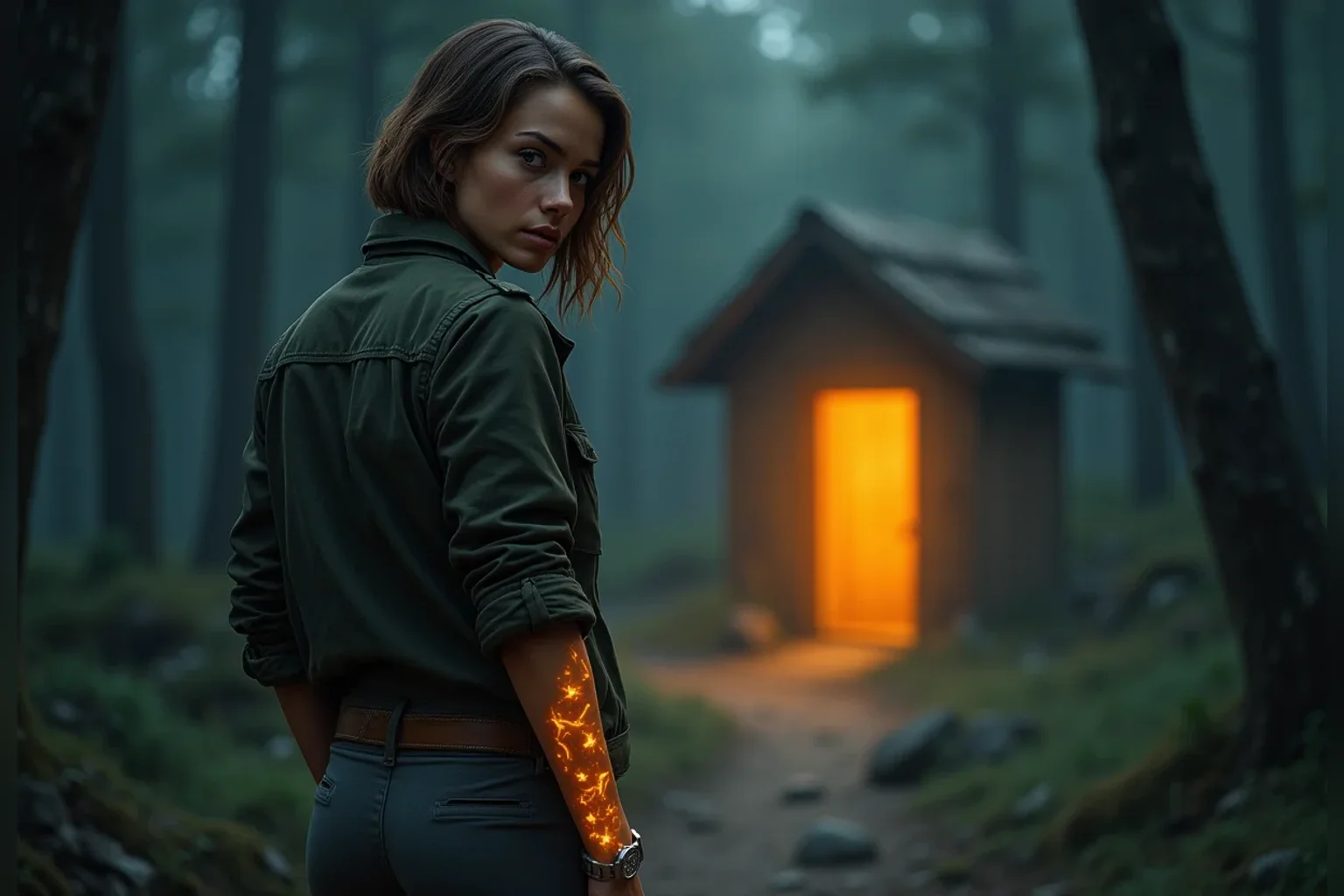
Warmth. Where the fragment had rested in her palm, her skin was warm — generating heat rather than receiving it, as though the contact had started something she couldn't stop. The lines of her tattoo, she realised, were visible. Faintly. The same sourceless light as the carved stone.
She made a sound, low and involuntary, and pressed her palm against her thigh to extinguish it.
Behind her, from the direction she'd come, the stranger's voice carried through the trees — not calling to her, but speaking to someone else. Calm. Conversational.
Then the old woman's voice answered.
They knew each other. The stranger had said *I'm not with them* in the flat certainty of someone accustomed to being believed. Mara filed that under *lie* and kept moving.
A light appeared ahead — orange, stationary, too steady for a torch. A structure. A window.
She could circle wide and avoid it entirely. Or she could go toward the only warmth left in the dark.
Your choice
Chose to end the story
Scene 5 — Finale
She circled wide.
It cost her an hour and a torn sleeve and one bad step into a streambed that soaked her boot to the ankle, but she kept the orange light at the edge of her vision the whole time — a reference point, not a destination — and eventually the trees thinned and the slope opened onto a ridge where the sky came back, enormous and salted with stars.
She sat on a flat stone and looked at her hand.
Still warm. Still faintly luminous, the tattoo's lines tracing their familiar geometry against her skin like something trying to be read.
She thought about the stone fragment — cold in the room's warmth, warm in the forest's cold, as though it had always been calibrating against her. She thought about the old woman's wrist. The patience in her face. The patience of someone who has already decided how the evening will go.
Mara had spent three years telling herself she'd designed the tattoo herself. In Berlin. Drunk on two glasses of Georgian wine, sketching on a napkin for an hour before she'd handed the napkin to the artist and said *exactly this, no changes*. She'd never asked herself where the shapes had come from. She'd simply known them.
She pressed her palm flat against the cold stone of the ridge.
The warmth didn't extinguish. It conducted — moved out through her hand and into the rock beneath her, and something in her chest that had been clenched since the village, since the fragment, since her own name in the old woman's mouth, slowly released its hold.
She didn't know what she was. She didn't know what the village knew, or the stranger, or the carved stone she'd thrown into the dark.
But her hands were steady. She noted that deliberately.
Below, somewhere in the forest, the orange light went out. As though it had only been waiting for her to stop running.